About Book One
What if being able to carry everything is not the same as being whole?
Marcus is dependable. Bills get paid. Work gets handled. His family knows he will show up. He has also learned to call the ache in his shoulders, the pauses in the car before he goes inside, and the tiredness that sleep cannot fix “just life.”
The rule came from his father: We push through. It was handed down as protection, discipline, love, and manhood. Marcus built a life around it. Now his son, MJ, is beginning to answer in the same clipped language, while his wife can see the rest of the family adjusting around a silence Marcus still believes belongs only to him.
When a conversation in the shop puts language around the hidden weight men carry—and the notebook Marcus has avoided for years returns to the center of his life—he must confront a question he has never allowed himself to ask.
The Weight We Carry does not offer Marcus an overnight transformation. It follows something quieter and more difficult: the moment a man becomes honest enough to see the pattern, present enough to recognize what it is costing, and willing enough to begin interrupting what he has inherited.
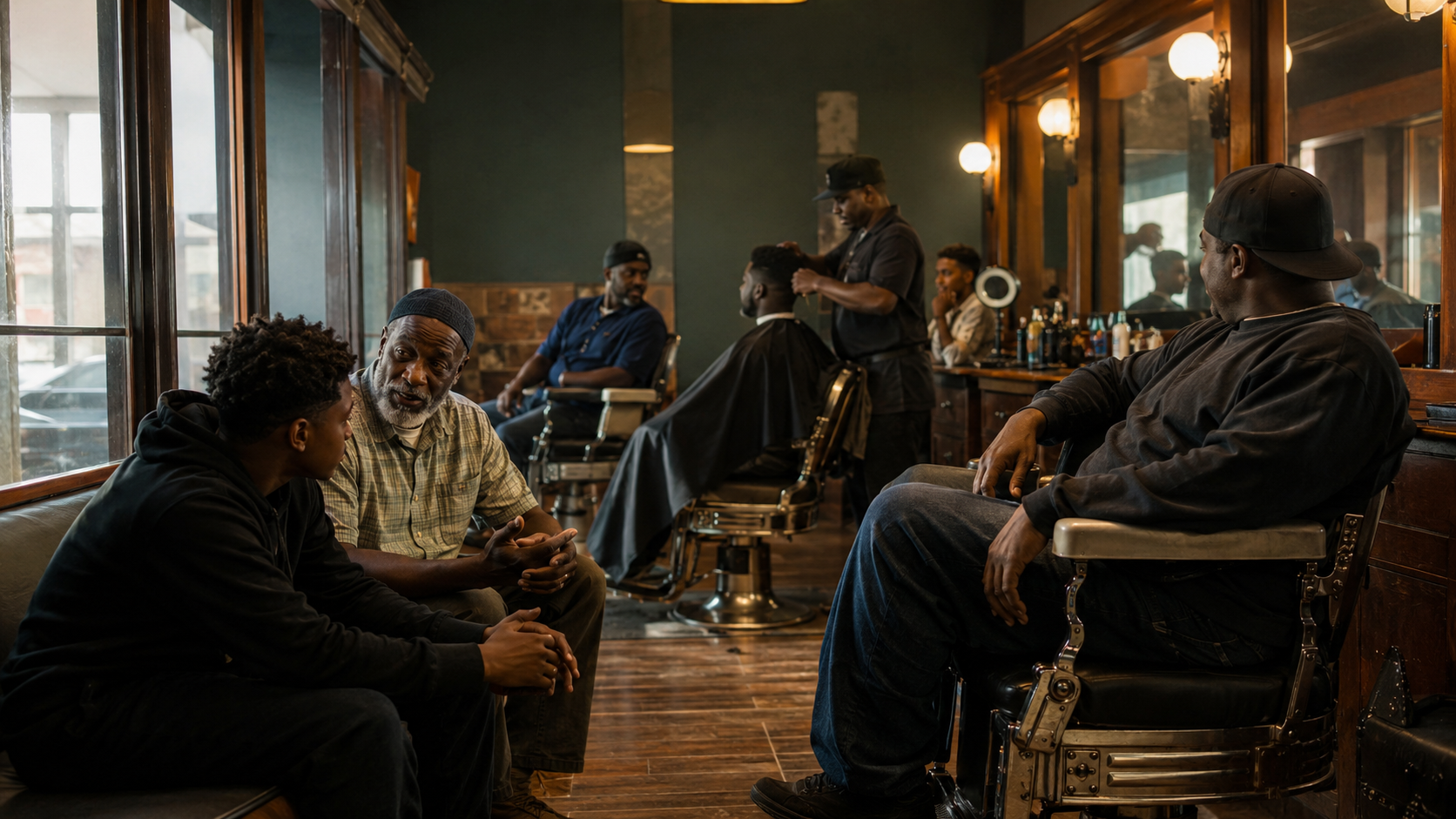
The shop is more than a setting
Truth rarely enters through the front door.
It arrives through jokes, arguments, sports talk, stories about work and marriage, and the sudden quiet that follows a sentence nobody expected to hear. Boys, fathers, elders, and friends share the same room. Men speak around pain before they speak about it. Sometimes a joke reveals more than a confession would.
The shop is a cultural home, a stage for masculine performance, and an intergenerational classroom. It is not a clinical room, and Doc is not a savior. It is a trusted community space where honesty can begin before anyone calls it healing.
Across every volume, the chairs, clippers, debates, regulars, and rituals create one shared world. The person at the center will change. The shop will remain the connective tissue.